For years, sustainability in steel was viewed as a long-term ambition.
Today, it’s becoming a market access requirement.
From automotive manufacturers to construction giants, buyers are no longer asking only about price and quality.
They’re asking:
“How much carbon is embedded in your steel?”
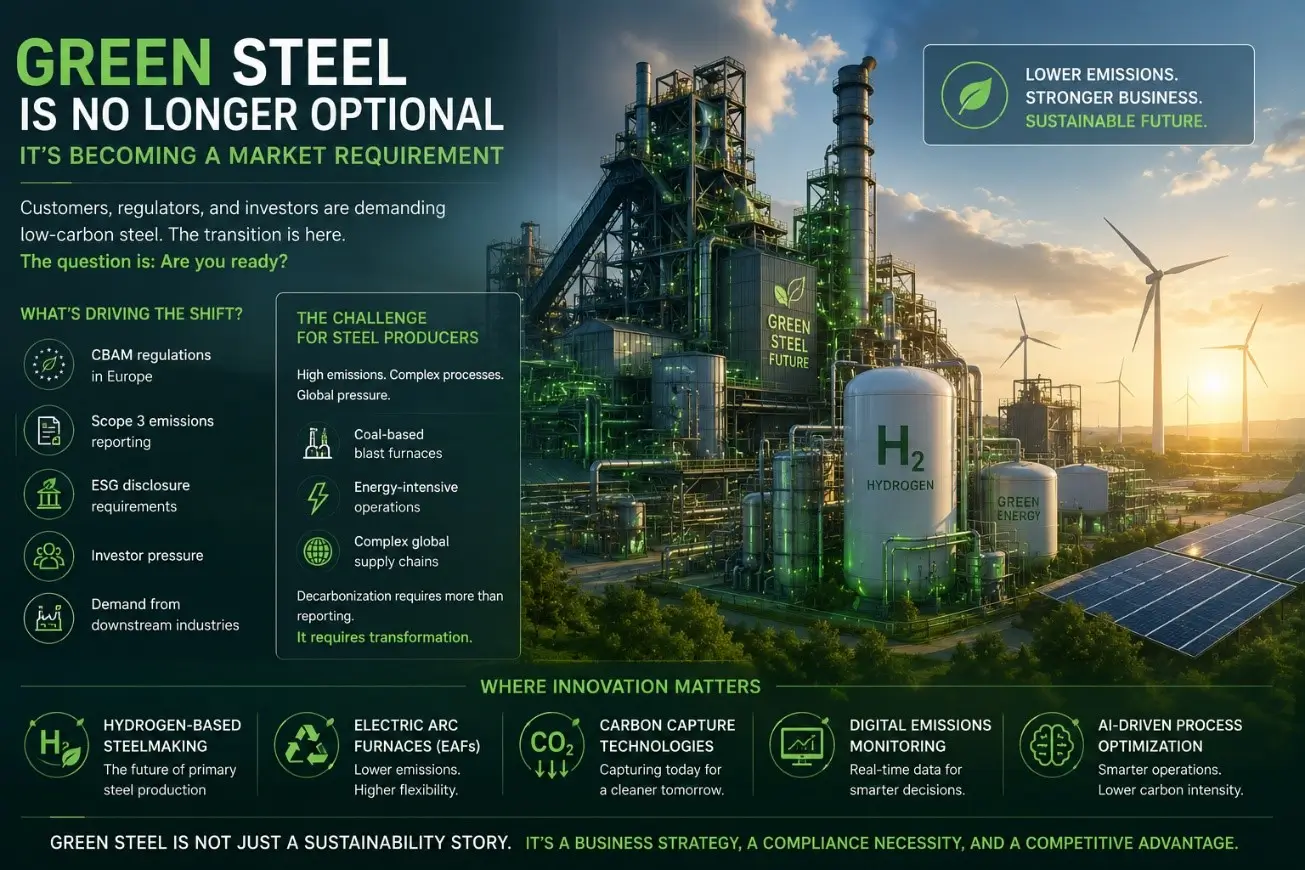
What’s Driving the Shift?
Several forces are accelerating the transition toward low-carbon steel:
- CBAM regulations in Europe
- Scope 3 emissions reporting
- ESG disclosure requirements
- Investor pressure
- Demand from downstream industries
The result?
Carbon intensity is becoming a competitive differentiator.
The Challenge for Steel Producers
Reducing emissions in steel is not simple.
The industry still depends heavily on:
- Coal-based blast furnaces
- Energy-intensive operations
- Complex global supply chains
This means decarbonization requires more than reporting frameworks or carbon offsets.
It requires operational transformation.
Where Innovation Matters
The companies leading the transition are investing in:
- Hydrogen-based steelmaking
- Electric Arc Furnaces (EAFs)
- Carbon capture technologies
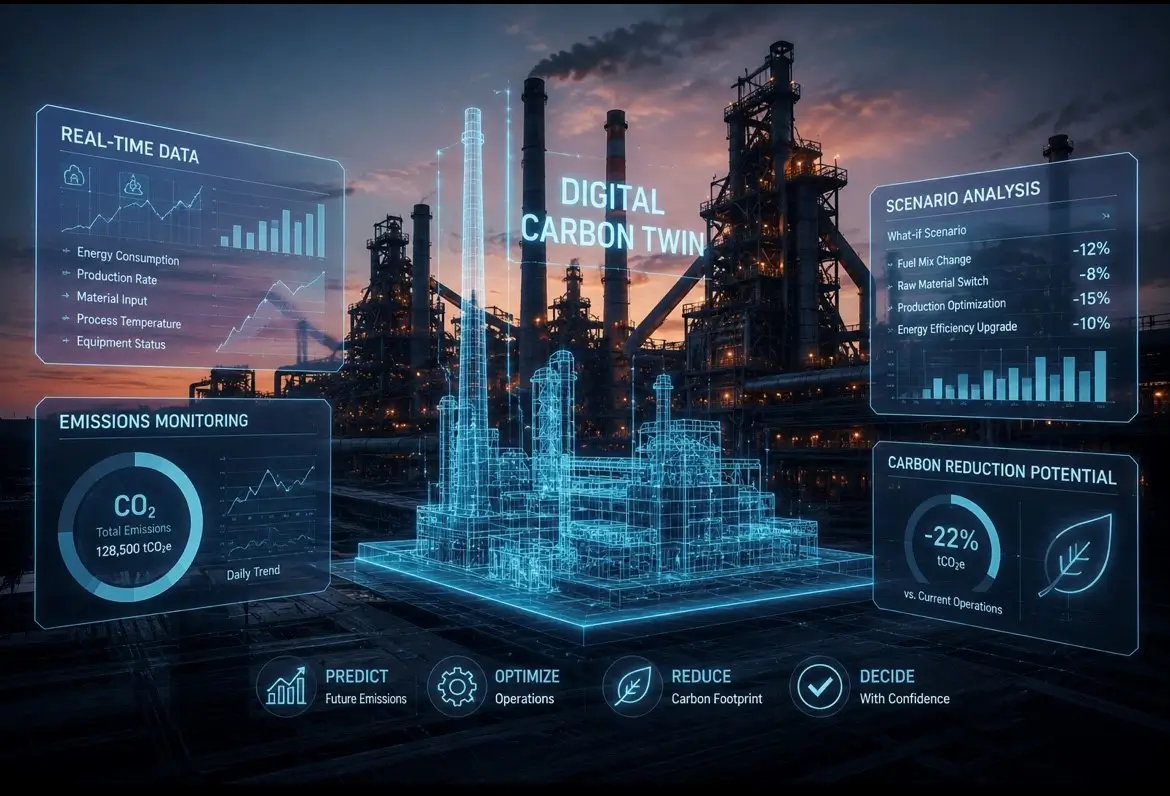
- Digital emissions monitoring
- AI-driven process optimization
The future winners in steel may not only be the most efficient producers
but the most carbon-efficient producers.
Green steel is no longer just a sustainability story.
It’s becoming a business strategy, a compliance necessity, and a competitive advantage.
#GreenSteel #Decarbonization #SteelIndustry #Sustainability #ESG #CBAM #CarbonEmissions #IndustrialInnovation #ClimateTech #CleanIndustry